


Carnival of Lies
- Michael Shaw

- Aug 13
- 2 min read
Updated: Oct 28
Reflections
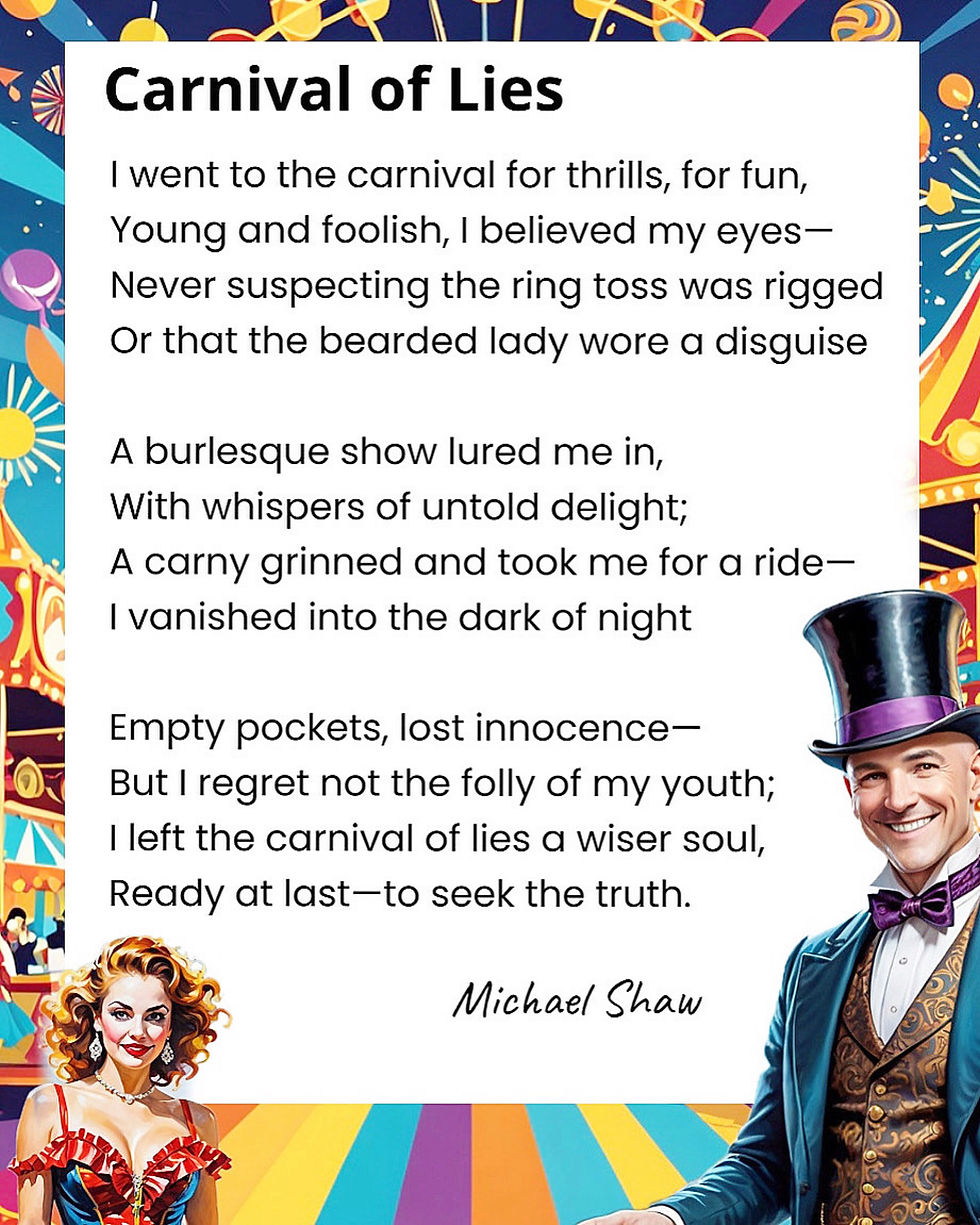
Carnival of Lies is a short poem about life experience. It begins with youthful excitement: I went to the carnival for thrills, for fun. The speaker arrives eager for adventure, believing what he sees. But the ring toss was rigged and the bearded lady wore a disguise. The many attractions at the carnival may be other than what they appear at first.
Drawn in deeper, the speaker is tempted by a burlesque show. Then a carny takes him for a ride, and he vanishes into the dark of night. The carnival becomes a symbol for life experiences shaded with dark overtones. In the end, the poet has lost his innocence and his pockets have been emptied.
A shift in perspective
Yet the poem’s final stanza offers an important shift in perspective. Instead of expressing regret or anger, the speaker reframes the experience: I left the carnival of lies a wiser soul, / Ready at last—to seek the truth. It is often the experiences we perceive as negative that teach us the most.
In the moment, an experience may seem like failure, trauma, or loss. With time, that same experience can bring greater insight into ourselves and the world around us, sharpening our judgment and guiding us toward a deeper truth. When we begin to see our “bad” experiences in this way, we approach radical acceptance—the understanding that events we label as bad are essential steps toward growth, and therefore may actually be good, if we can think in the long term.
Affirmation
I am grateful even for experiences I once labeled as negative. They have left me wiser and more ready to seek the truth.


Comments